Once the metal is cleaned, treated, and painted, the strip is rewound into a coil size prescribed by the customer. From there, the coil is removed from the line and packaged for shipment or additional processing.
After the primer is applied and cured, then the metal strip enters the finish coat station where a topcoat is applied. Topcoats provide color, corrosion resistance, durability, flexibility and any other required physical properties. Like primers, the topcoat is cured using thermal cure ovens.
Oven
Coil coating ovens can range from 130 feet to 160 feet and will cure the coatings in 13 to 20 seconds.
During this stage, the strip enters the prime coat station whereby a primer is applied to the clean and treated metal. After the primer is applied, the metal strip travels through a thermal oven for curing. Primers are used to aid in paint adhesion, improve corrosion performance and enhance aesthetic and functional attributes of the topcoat.
S Wrap Coater
The S wrap coater design allows for primers and paints to be applied to the top and back side of the metal strip simultaneously in one continuous pass.
The cleaning and pretreating section of the coil coating process focuses on preparing the metal for painting. During the cleaning stage, dirt, debris, and oils are removed from the metal strip. From there, the metal enters the pretreatment section and/or a chemical coater whereby chemicals are applied to facilitate paint adhesion and enhance corrosion resistance.
Dried-In-Place
In this stage a chemical that provides enhanced corrosion performance is applied. This treatment can be chrome free if required.
The accumulator is a structure that adjusts up and down to store material, which makes continuous operation of the coil coating process possible. This accumulation will continue to feed the coil coating processes while the entry end has stopped for the stitching process. As much as 750 feet of metal can be collected.
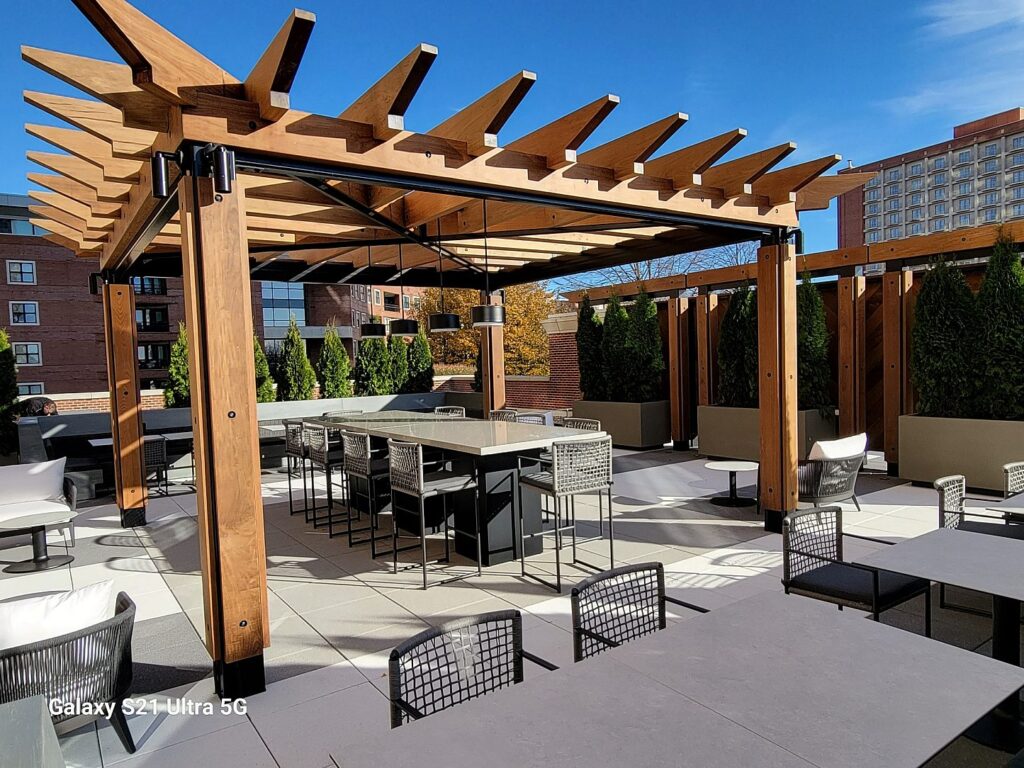
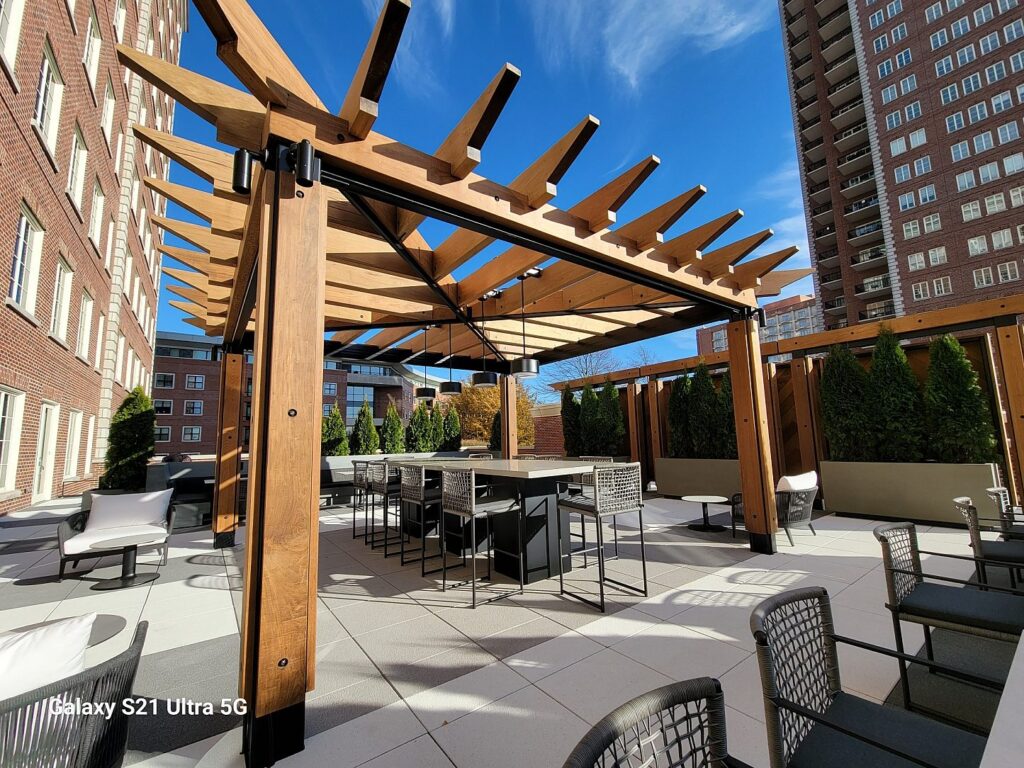
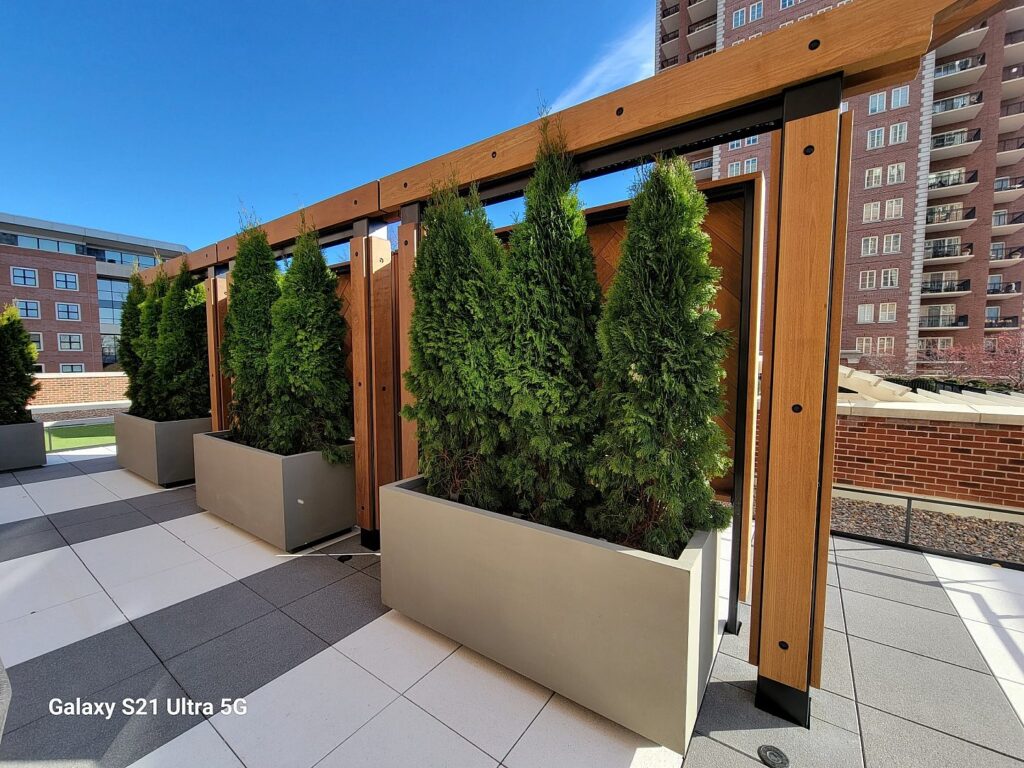
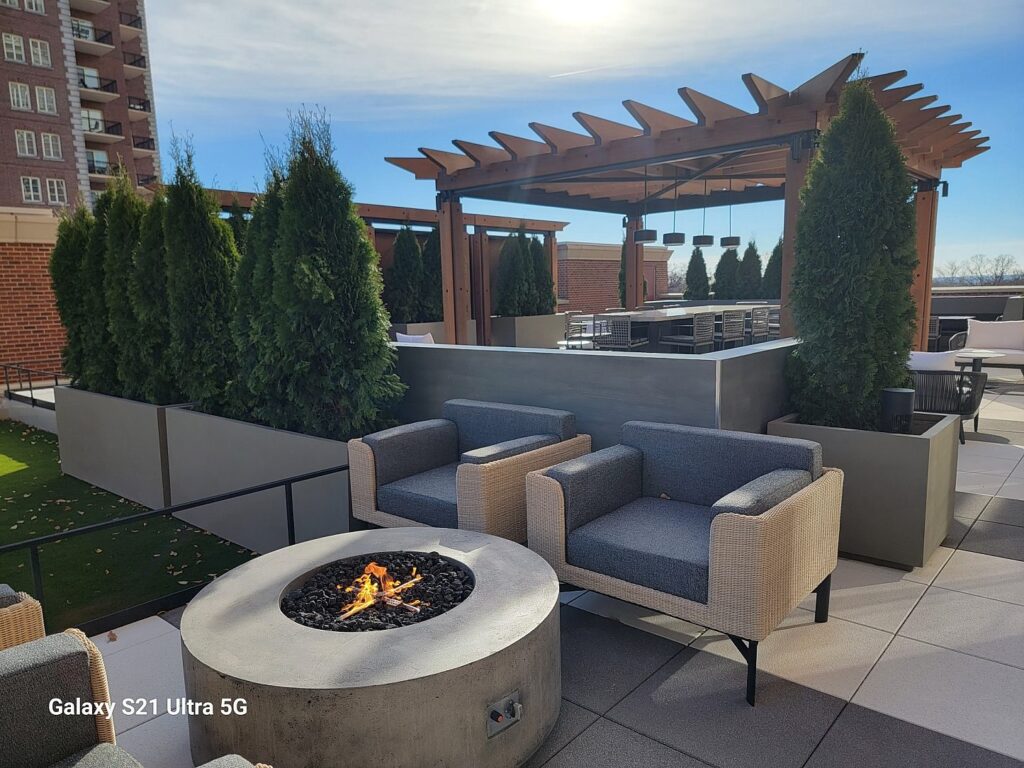
This pergola and screen wall project serves as a prominent feature in the renovation of the fifth and sixth floor amenity roof deck at "The Plaza in Clayton" in Downtown Clayton, Missouri. The Plaza is notably one of the most successful mixed-use developments ever to have been constructed in Clayton. The development includes the prestigious Ritz Carlton and neighbors some of the finest dining and retail in the city.
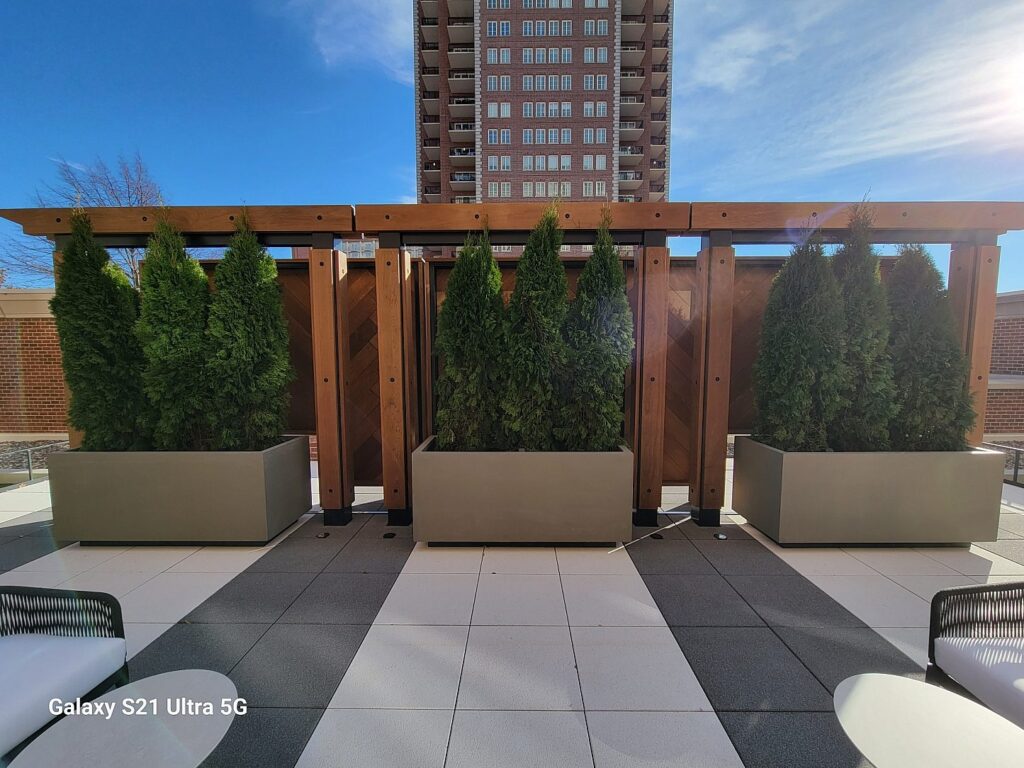
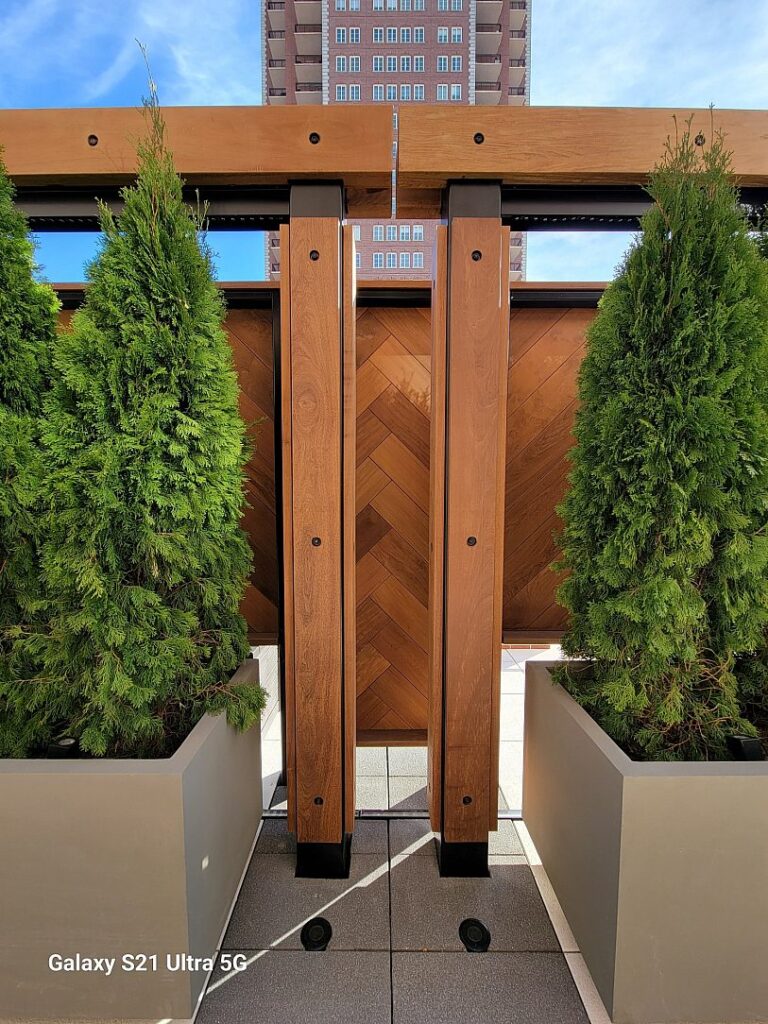
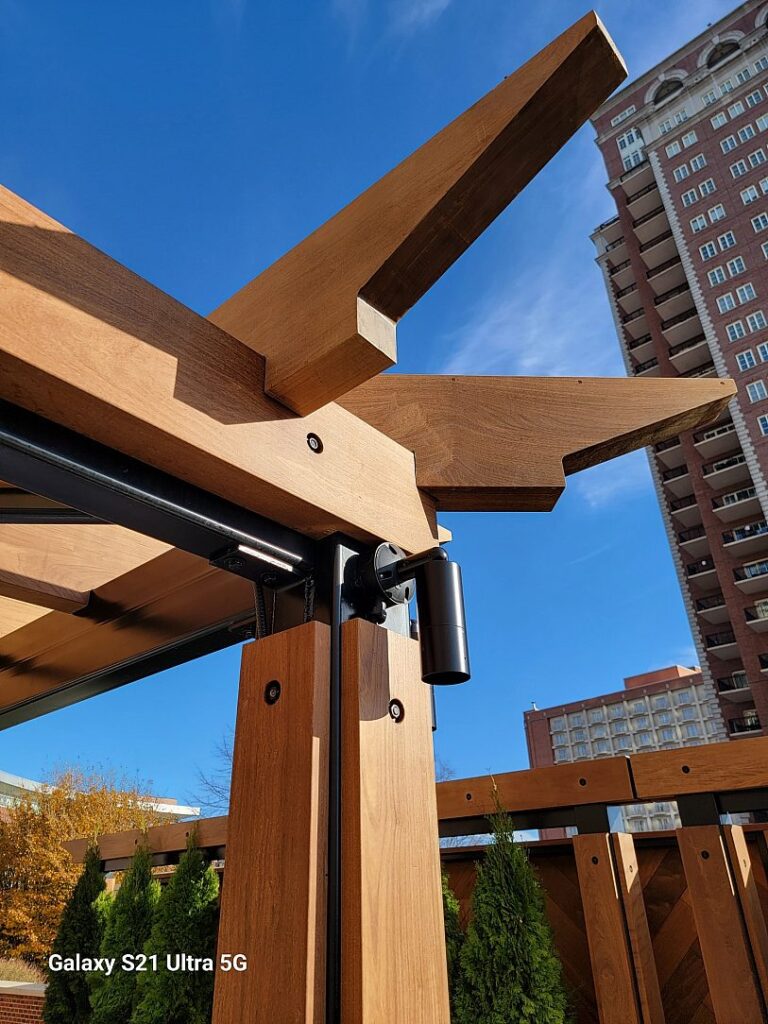
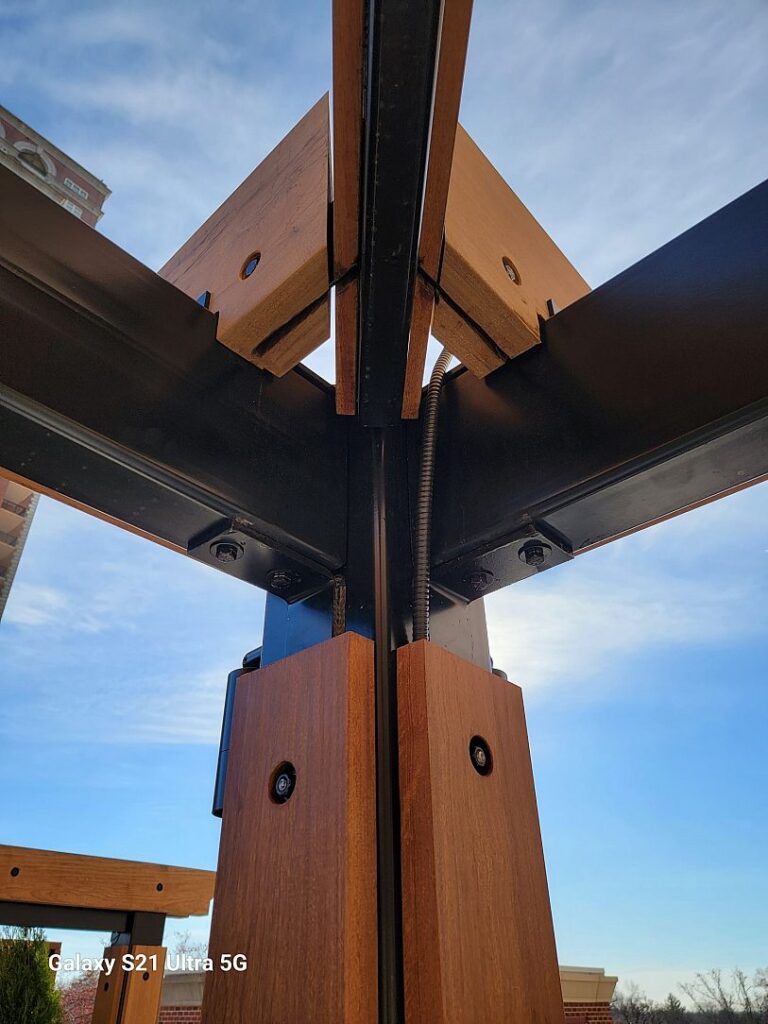
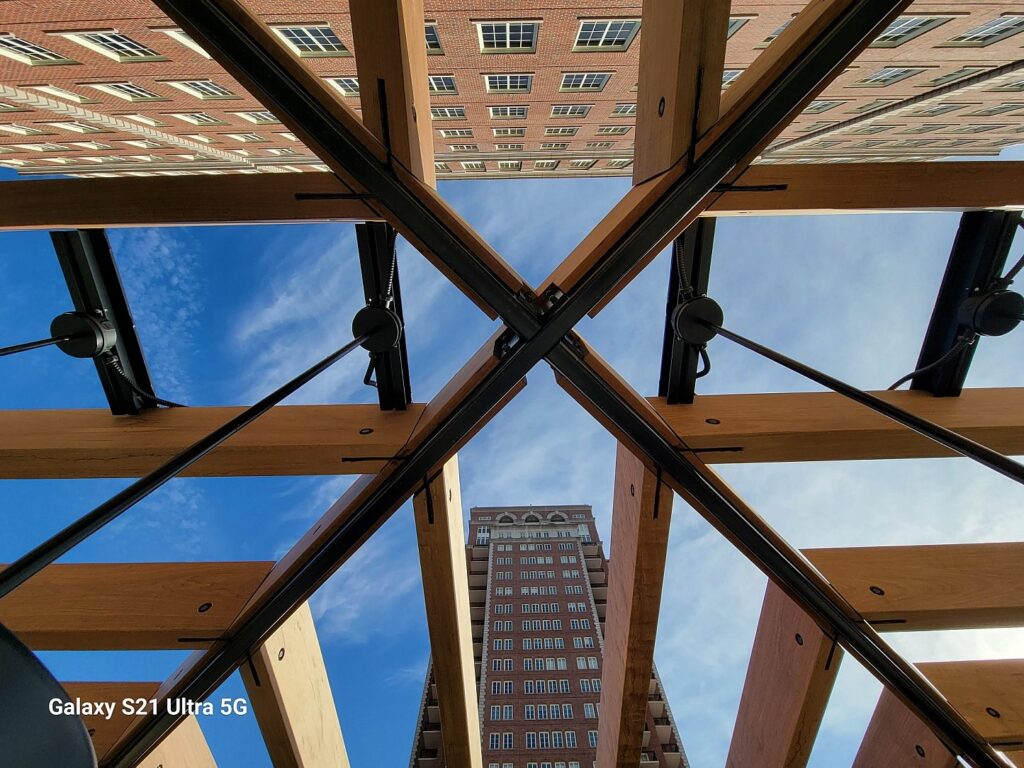
Designed to augment the already inviting atmosphere of the outdoor amenity deck, the pergola and screen walls constitute a stunning duplex system. Comprising a hot-dip galvanized substructure with a black paint topcoat, the steel is elegantly wrapped in IPE Wood, with added lighting features for aesthetic appeal. The design, though simple, effectively captures the intended natural and urban ambiance.
The pergola, situated on the sixth floor of The Plaza, functions as a recreational sitting area for the socially active tenants. The substructure, composed of 8” x 8” tubing standing 10” high at all corners and connected with cross trusses, is covered with Brazilian hardwood. The sitting area is complemented by a 3” thick IPE wood providing shade on hot St. Louis days. Meanwhile, the screen wall on the fifth Floor ensures privacy for the open amenity area from adjacent office buildings and parking garages. Constructed with 6” x 2” Steel Tubing, the structures are stacked for an attractive layered look.
The combination of hot-dip galvanizing and paint, along with the use of durable IPE Wood, results in a phenomenal design and a product with enduring utility. The steel substructure requires minimal maintenance, contributing to the long-life cycle of these structures and adding value to the project by eliminating the need for frequent maintenance or replacement for many years.
“This project had its challenges mainly for the complexity of getting materials to the outdoor amenities decks on the fifth and sixth floors, but after completion of the project and seeing how pleased the customer was with the finished product made it completely worth it.”
Marshal Tucker (Senior Project Manager for Lawrence Fabric and Metal Structures)